

Simple Ube Macarons
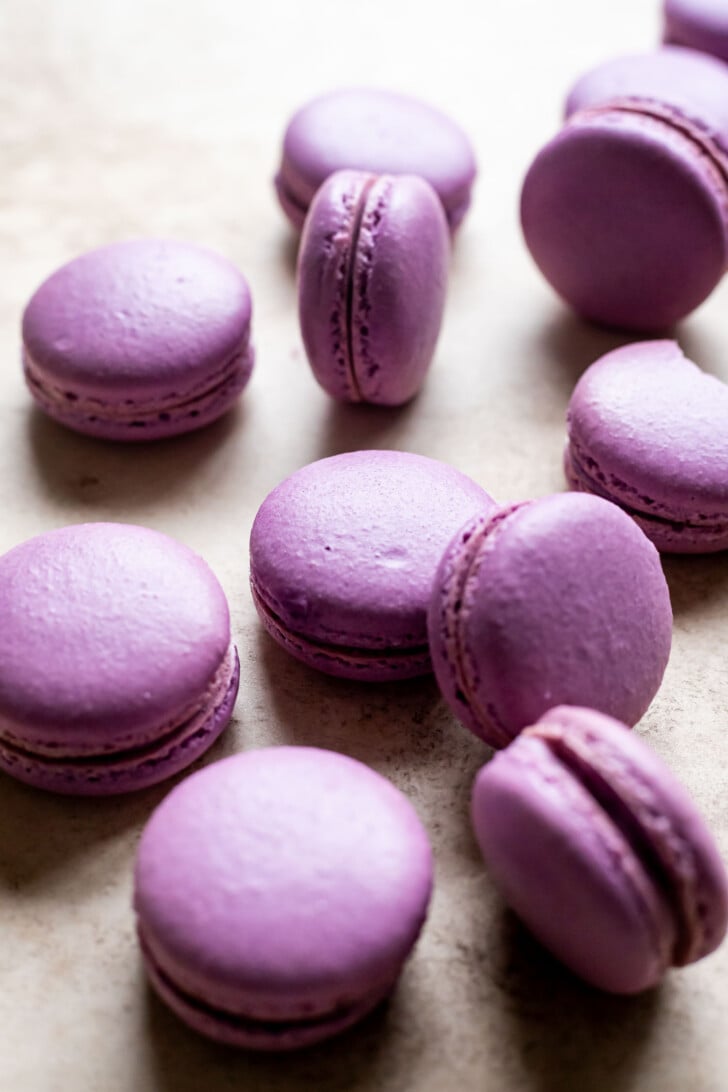
These simple ube macarons are pretty, full of flavor, and most importantly not too sweet. A vibrant purple ube macaron shell is filled with a smooth and silky ube buttercream. In this blog post, learn all the tips and tricks on how to make these beautiful macarons including how you know your meringue is whipped enough and a foolproof way to know if your batter is mixed enough.

Last year, I really buckled down and refined my macaron recipe, starting with my pandan macarons. So this year I want to continue making Asian-inspired macaron flavors with this one – ube macarons. It’s no secret how much I love ube. This Filipino ingredient is one of the best and trendy ingredients out there. I love how it makes food purple and how well it goes with dessert recipes. I’m so excited to continue my journey with this ingredient by making these macarons!

What is ube?
Ube is another name for purple yam. This ingredient is often used in Southeast Asian cuisine, and is especially popular in Filipino cuisine. It has a vanilla pistachio flavor that goes really well in both sweet and savory dishes. Personally, I like it in desserts. When I make ube desserts, I typically use ube in the form of ube halaya which is when purple yam, butter, coconut milk, and other ingredients are combined to create a jam. Some ube desserts that I’ve personally loved are ube brownies, ube cookies, and ube pie.
Ingredients, Substitutions & Adjustments
Ube Macaron Shell
- Almond flour – Macarons are an almond flour based cookie, making them gluten free! This provides the structure to the cookie.
- Powdered sugar – Adds sweetness and structure to the cookie.
- Egg whites – Egg whites are whipped into a meringue which makes the shells puff up and creates the “feet”.
- Cream of tartar – Provides stability to the meringue.
- Granulated sugar – Granulated sugar creates a glossy look and makes the shells sweet.
- Ube extract – Provides the ube flavor and vibrant purple color. It’s hard to find ube extract, so I order it online on Amazon.
Ube Buttercream
- Unsalted butter and powdered sugar – A basic buttercream recipe is a 2 to 1 ratio of powdered sugar to butter.
- Ube extract – Provides the ube flavor and vibrant purple color.
- Salt for seasoning
Tools you will need
- Kitchen scale – I highly highly recommend a kitchen scale. Every ingredient must be precise for best, most consistent results.
- Food processor – A food processor helps break the almond flour and powdered sugar down, so the macaron shells have a smooth texture.
- Fine mesh sieve – Sifting the dry ingredients helps make the macaron shells smooth.
- Stand mixer or hand mixer – I highly recommend using a hand mixer or stand mixer (my preference) to whip the meringue.
- Piping bags and tips – This helps you pipe out the macaron shells. A round pastry tip helps keep in uniform and round.
- Spatula – This is what I use to mix the wet and dry ingredients.
- Silicone mat – You can use a silicone mat or parchment paper. I prefer a silicone mat with a macaron guide.
- Baking sheets – You will need 2 baking sheets for this recipe.



How to make ube macarons
Making the meringue
Combine 150 grams of almond flour and 200 grams of powdered sugar in a food processor. Pulse a few times until you see a fine powder. Sift into a bowl and set aside. Add 4 egg whites and ⅛ tsp of cream of tartar to a stand mixer. Whip on medium speed (speed 6).
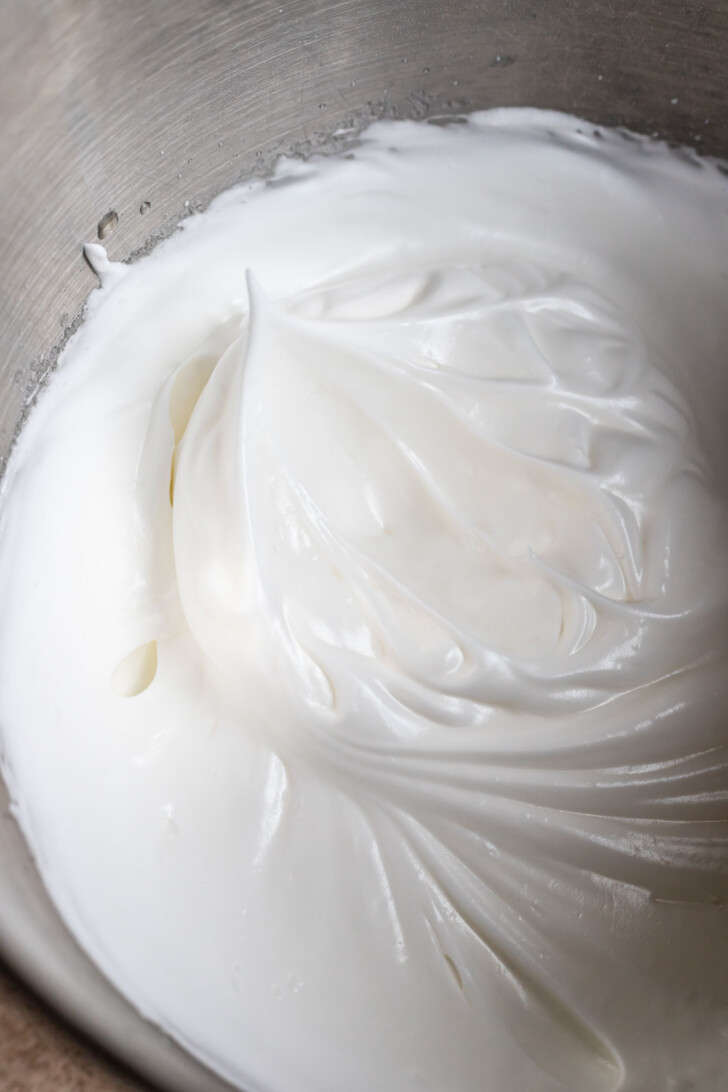
Once the mixture is foamy and there are small bubbles in the bowl, start adding 100 grams of granulated sugar. Add a tablespoon at a time so you don’t deflate the mixture. Once you’ve added all the sugar, increase the speed to 8 and whip until stiff peaks. One way to know if you’ve whipped the meringue enough is to invert the bowl and if the meringue doesn’t fall out, you’re good! Add 1/8 tsp of ube extract to the meringue and whisk until combined.


Making the macaron batter (macronage)
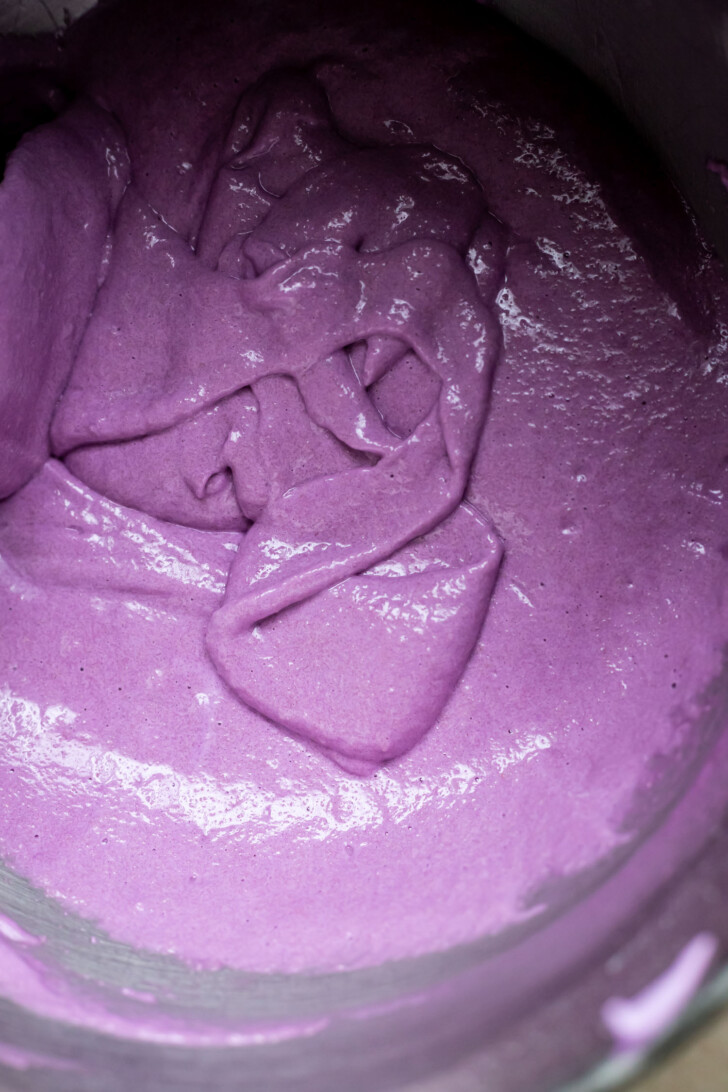
Combine your wet ingredients with your dry ingredients. Sift 1/2 of the dry ingredients into the meringue and gently fold until combined. Sift the rest of the dry ingredients into the meringue and gently fold the mixture until the batter slowly falls off the spoon in a steady, unbroken stream like ribbons. You have mixed the batter enough once you can draw a figure 8 without the batter breaking.
Another thing to look for is if the edges of the figure 8 soften and slowly absorb into the batter over the course of a minute. One last thing you can use as a test is to spoon a tablespoon of the batter onto a plate. As you lift up the spoon, a peak will be left over. If that peak settles into the batter over 10 seconds, it is done. This is such a crucial step, and one that is the most difficult to get right.
Add a round pastry tip to a pastry bag and snip the end. Spoon the batter into the pastry bag. I like to use a #10 round pastry tip.

Piping and baking the ube macarons
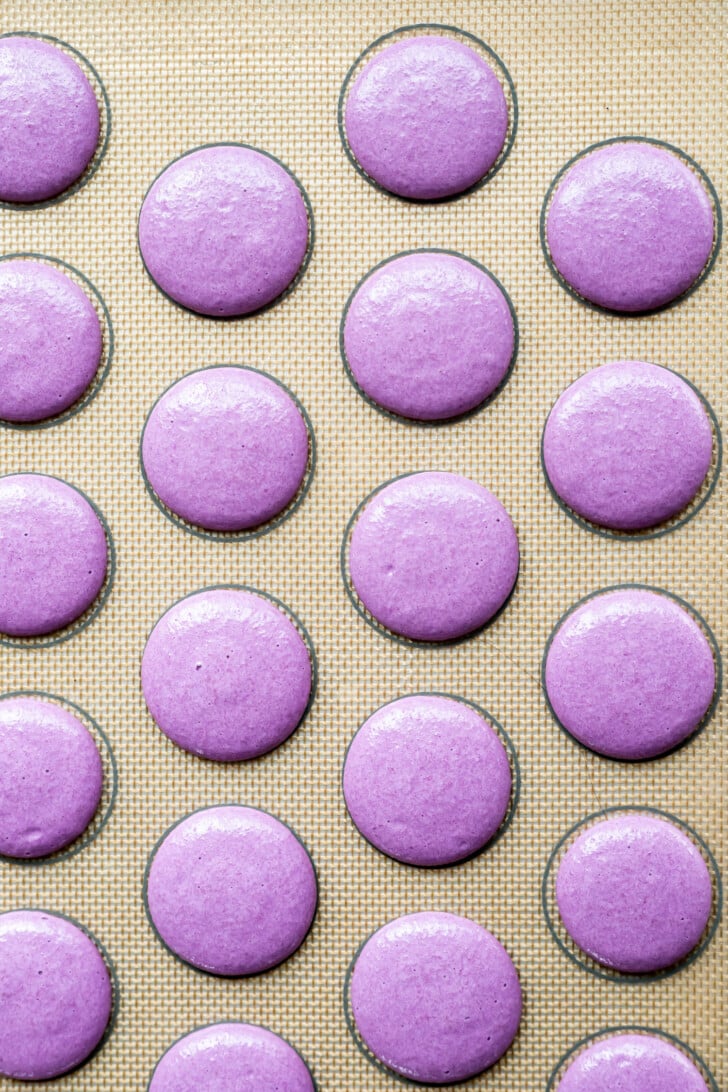
Prep 2 baking sheets by placing silicone mats onto the baking sheets. Following the macaron template, pipe the batter onto the silicone mats. Slam each baking sheet on the counter twice. Let the macaron shells dry for at least 1 hour until you can run your finger over the top without batter getting on it. It can take up to 2 hours.
Move your oven rack into the top third of the oven. If your heat source is coming from the top, move the oven rack to the bottom third of the oven. This prevents the macaron shell from browning. Preheat the oven to 300 degrees F (149 degrees C).
Once the macarons have dried out, bake the macarons for 18-20 minutes. Bake 1 tray at a time. They’re done if you gently push the macarons and the macarons are not loose. If they move a bit, bake them for another minute and check again. Cool the macarons for at least 20 minutes on the baking sheet until completely cool.


Making the ube buttercream and putting it all together
While the macarons are cooling, make the ube buttercream. Whisk together 2/3 cup of softened unsalted butter and 1 1/3 cup of powdered sugar. Lastly, add 4 drops of ube extract and a pinch of salt to the mixture. Whisk until combined. This process is easier with a stand mixer. Add the buttercream to a piping bag.
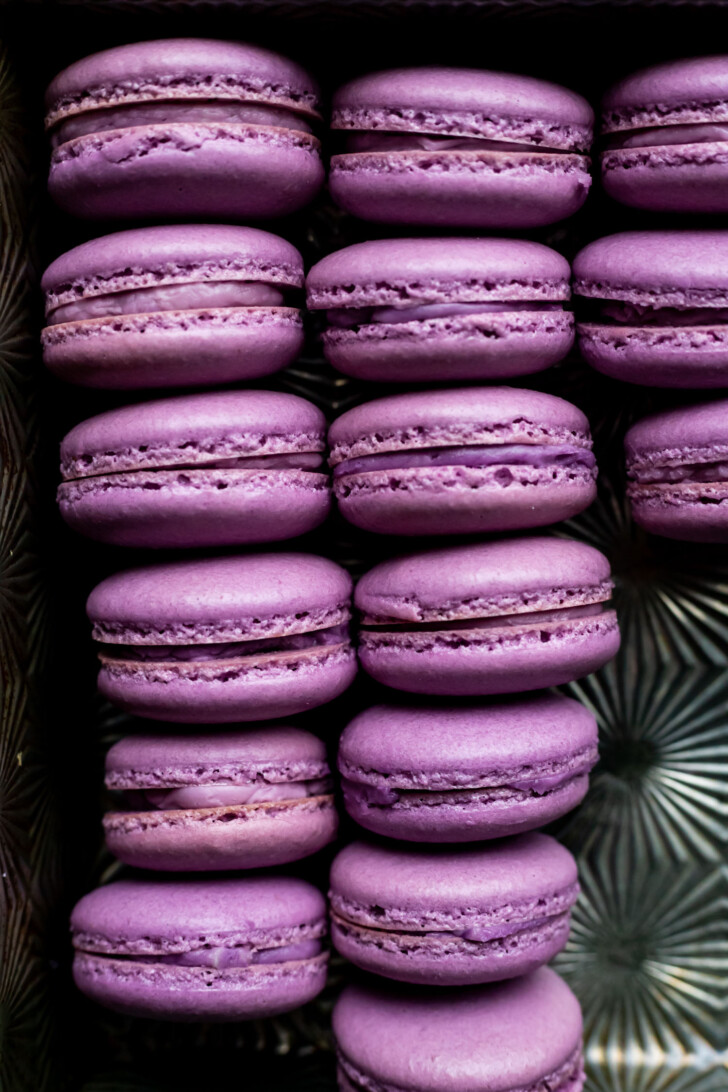
Now it’s time to put it all together! Pair up the macaron shells by size. Not all your shells will be the same size so it helps to match up your shells by size before adding the filling. Pipe the buttercream onto half the macaron shells. The amount of buttercream should be slightly smaller than the macaron shell. Place the second half on top. You can enjoy right away, but for the best flavor, let the macarons mature in the fridge for 24 hours.
Tips on how to make the perfect ube macarons
Use a kitchen scale to measure ingredients
Every ingredient must be precise, so I highly recommend a kitchen scale. I’ve tried making macarons with volume measurements, and I’ve had inconsistent results.
Sift the dry ingredients
Sifting the dry ingredients helps create a smoother macaron shell. I like to sift it twice just in case.
How do you know your meringue is whisked enough?
This is such an important step because the meringue provides lift to the macaron shells, making them airy. The meringue has been whisked enough if the mixture has stiff peaks meaning when you lift the whisk out of the mixture, it stands straight up. Another foolproof way to know is to invert the bowl. If the meringue stays stuck to the bowl, it’s done. I personally prefer the second method.
How do you know you have mixed the batter enough?
This is called macaronage which is a Frenchy way of saying mixing wet and dry ingredients for macarons. I wrote a huge paragraph in my recipe for this since this is the step where most people mess up. There are a few things you can look for to figure out if you’re done with macaronage.
- The batter should fall off the spatula in a steady stream like ribbons. If the batter breaks, it’s not ready.
- You should be able to draw a figure 8 with the batter without it breaking.
- The edges of the figure 8 should settle a bit/soften over the course of a minute.
- Finally, you can also make a test macaron by scooping out a tablespoon onto a plate. As you lift the spoon, a peak should be left over. That peak should start to settle into the macaron over the course of 10 seconds.
Dry out the macaron shells for at least an hour
This is an important step. Let the macarons sit out for at least 1 hour, so a dry skin forms. This helps it stay uniform and prevents it from spreading in the oven. Depending on how humid your space is, it could take up to 2 hours. This is a pretty wet macaron batter.
Did you make this dish?
If you made this dish, I would love to see!
Follow Cooking Therapy on Instagram, snap a photo, and tag and hashtag it with @cooking__therapy and #beccascookingtherapy.
Stay connected and follow along on Facebook, Pinterest, and Instagram for all my latest recipes.
Disclaimer: If you purchase anything through a link on this site, I may receive a small commission from the purchase at no extra cost to you. I only recommend products that I would personally use. Thank you so much for the support!

Get the Recipe:
Simple Ube Macarons
Ingredients
Ube Macaron Shells
- 150 g almond flour
- 200 g powdered sugar
- 4 egg whites
- ⅛ tsp cream of tartar
- 100 g granulated sugar
- ⅛ tsp ube extract
Ube Buttercream
- ⅔ cup unsalted butter
- 1 ⅓ cup powdered sugar
- 1 pinch salt
- 4 drops ube extract
Equipment
Instructions
Prepping the macaron shell batter
- Combine 150 grams of almond flour and 200 grams of powdered sugar in a food processor. Pulse a few times until you see a fine powder. Sift into a bowl and set aside.
- Add 4 egg whites and ⅛ tsp of cream of tartar to a stand mixer. Whip on medium speed (speed 6).
- Once the mixture is foamy and there are small bubbles in the bowl, start adding 100 grams of granulated sugar. Add a tablespoon at a time so you don't deflate the mixture.
- Once you've added all the sugar, increase the speed to 8 and whip until stiff peaks. One way to know if you've whipped the meringue enough is to invert the bowl and if the meringue doesn't fall out, you're good!
- Add ⅛ tsp of ube extract to the meringue and whisk until combined.
- Combine your wet ingredients with your dry ingredients. Sift 1/2 of the dry ingredients into the meringue and gently fold until combined. Sift the rest of the dry ingredients into the meringue and gently fold the mixture until the batter slowly falls off the spoon in a steady, unbroken stream like ribbons. You have mixed the batter enough once you can draw a figure 8 without the batter breaking. Another thing to look for is if the edges of the figure 8 soften and slowly absorb into the batter over the course of a minute. One last thing you can use as a test is to spoon a tablespoon of the batter onto a plate. As you lift up the spoon, a peak will be left over. If that peak settles into the batter over 10 seconds, it is done. This is such a crucial step, and one that is the most difficult to get right.
- Add a round pastry tip to a pastry bag and snip the end. Spoon the batter into the pastry bag. I like to use a #10 round pastry tip.
Piping and baking the macaron shells
- Prep 2 baking sheets by placing silicone mats onto the baking sheets.
- Following the macaron template, pipe the batter onto the silicone mats. Slam each baking sheet on the counter twice.
- Let the macaron shells dry for at least 40 minutes until you can run your finger over the top without batter getting on it. It can take up to 1 hour.
- Move your oven rack into the top third of the oven. If your heat source is coming from the top, move the oven rack to the bottom third of the oven. This prevents the macaron shell from browning.
- Preheat the oven to 300 degrees F (149 degrees C).
- Once the macarons have dried out, bake the macarons for 18-20 minutes. Bake 1 tray at a time. They're done if you gently push the macarons and the macarons are not loose. If they move a bit, bake them for another minute and check again.
- Cool the macarons for at least 20 minutes on the baking sheet until completely cool.
Making the ube buttercream and putting it all together!
- While the macarons are cooling, make the ube buttercream. Whisk together ⅔ cup of softened unsalted butter and 1 ⅓ cup of powdered sugar. Use a stand mixer for the best results.
- Add 4 drops of ube extract and a pinch of salt to the mixture. Whisk until combined. Add the buttercream to a piping bag.
- Now it's time to put it all together! Pair up the macaron shells by size. Not all your shells will be the same size so it helps to match up your shells by size before adding the filling.
- Pipe the buttercream onto half the macaron shells. The amount of buttercream should be slightly smaller than the macaron shell. Place the second half on top.
- You can enjoy right away, but for the best flavor, let the macarons mature in the fridge for 24 hours.
Notes
- For all the tips and tricks, please refer to the blog post.
- I tested this recipe with 1/8 tsp and 1/4 tsp of ube extract. They both work, but I ended up going with 1/8 tsp because it reduced the drying period after you pipe the macarons. With 1/4 tsp, my macarons took closer to 2 hours to dry out. It however led to a more purple color and better ube flavor. You can use either measurement!